5 Ways Velpont Bridges Are Environmentally Friendly
Avg. Read Time: 3 min, 29 sec
Bridging the Gap
Short on time? Here are this article’s key takeaways…
Velpont’s open-bottom design preserves the natural streambed and enhances passage for aquatic organisms.
Minimal in-stream work reduces turbidity, habitat disruption, and permitting complexity.
Spans the full channel width to maintain natural flow and reduce erosion and washout risk.
75+ year durability minimizes replacement cycles and long-term environmental impact.
When you’re replacing a failing road-stream crossing, environmental impact isn’t a side note. It’s central to permitting, public perception, and long-term performance. Velpont is a modular precast concrete bridge system for road-stream crossings up to 75 ft (22.8 m). It’s engineered for minimal in-stream work while restoring and protecting natural stream function. That combination of speed, strength, and ecological sensitivity makes Velpont an extremely attractive solution for municipalities, engineers, contractors, and conservation partners alike.
Here are five ways Velpont bridges are built to work with the environment, not against it.
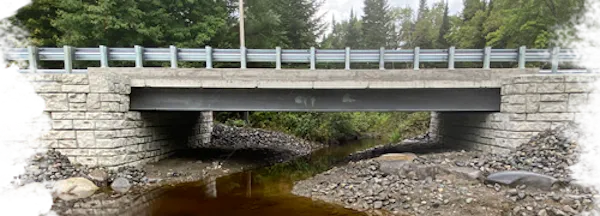
#1 – Open-Bottom Design Preserves the Natural Streambed
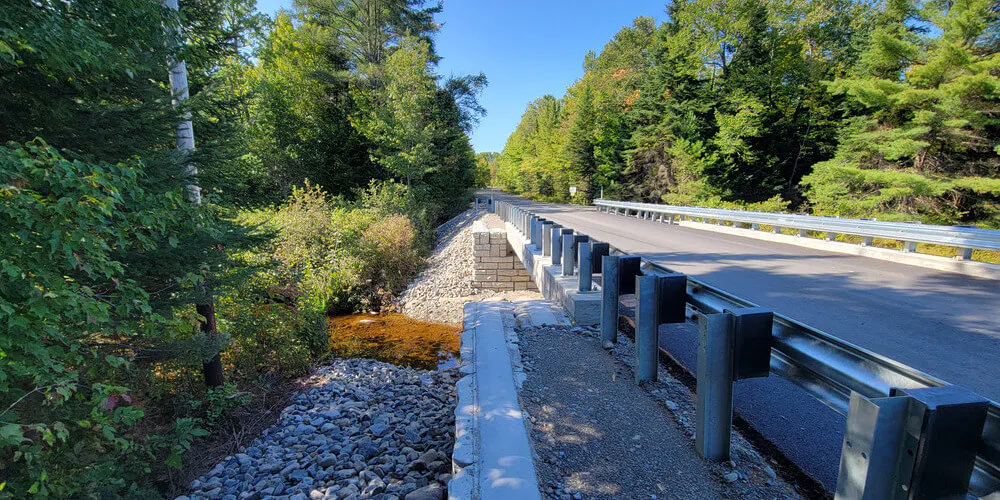
Velpont features an open-bottom bridge configuration, meaning no permanent structure is placed on the streambed. The result is that natural sediment transport continues uninterrupted, aquatic organism passage is improved, and the stream maintains its natural shape and function.
By letting the stream be a stream, Velpont supports principles associated with Stream Smart and other stream-friendly crossing initiatives. There’s more on Stream Smart later in this article.
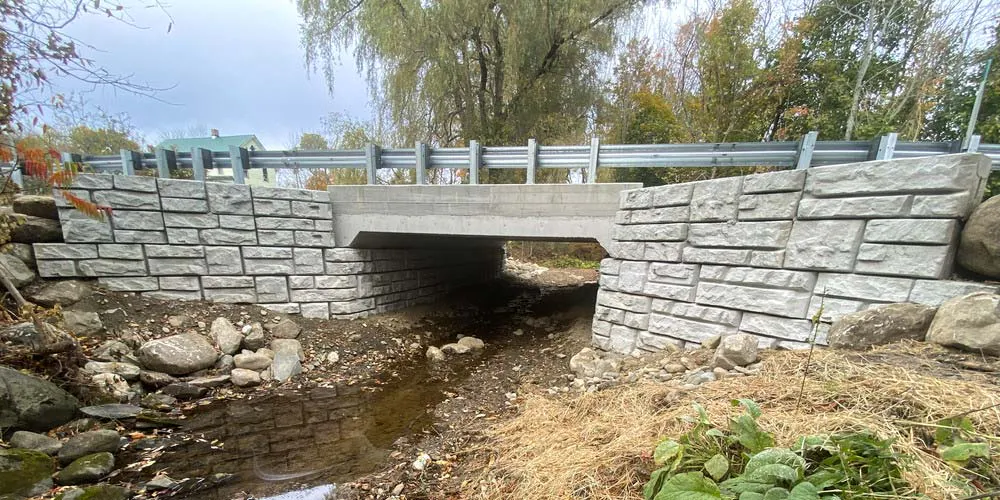
#2 – Minimal In-Stream Work Reduces Ecological Disturbance
Velpont abutment blocks are installed on prepared streambanks, not within the active channel. In many cases, installation requires little to no in-stream work beyond removing a failed culvert or other alternative.
Compared to traditional culvert installations, this approach:
- Reduces turbidity (suspended particles that disrupt the stream’s ecosystem) during construction
- Limits disturbance to aquatic habitats
- Simplifies environmental permitting
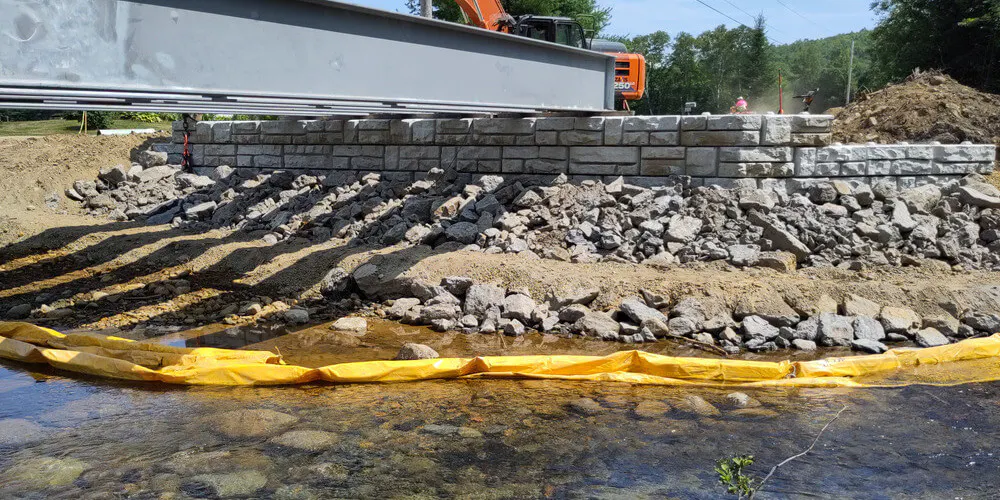
Because crews work primarily from the banks using standard equipment such as an excavator or loader, the waterway itself remains largely undisturbed during installation.
#3 – Restores Natural Bankfull Width and Flow
Typically, when infrastructure fails, the replacement is intended solely to continue the mission of the original solution. That’s one of the ways Velpont is different. Not only does it do the job of pipes, culverts, and other alternatives, but it also represents a significant environmental upgrade. Traditional pipes and culverts often constrict water flow, increasing velocity and contributing to contraction scouring. Over time, this can lead to erosion, outlet drops, and blocked fish passage. Alternatively, Velpont bridges span the channel rather than narrowing it. This helps:
- Maintain natural bankfull width
- Reduce erosion below the crossing
- Mitigate flow constriction and debris blockages
- Prevent washouts during high-water events
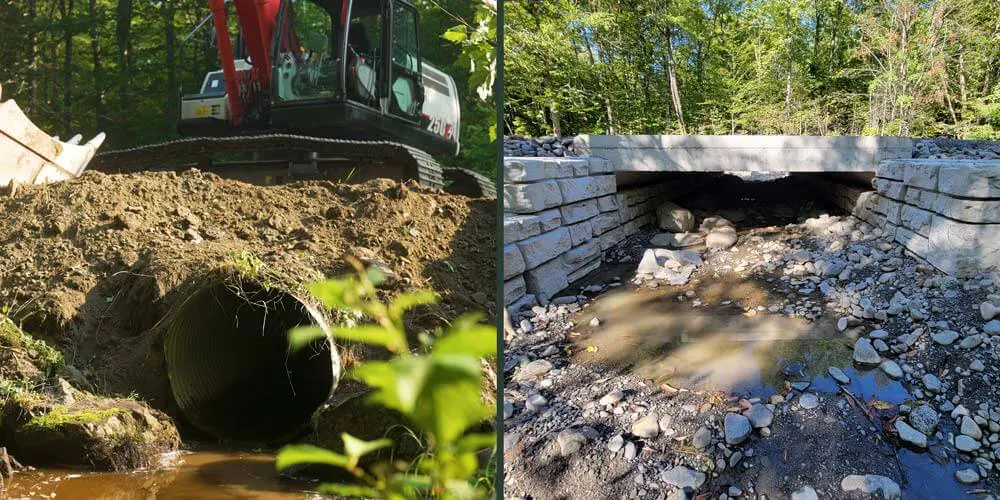
#4 – Long Service Life Reduces Lifecycle Environmental Impact
Sustainability is about installation and durability. Velpont abutment blocks are produced using high-quality concrete mixes rated for freeze-thaw exposure classifications, ensuring they perform in very severe climates. Reinforcing steel is protected by a minimum 3 in (76 mm) concrete cover, supporting long-term durability in demanding environments. Together with a projected lifespan of 75+ years, these characteristics contribute to a bridge system designed for lasting performance and reduced lifecycle disruption.
Long-term performance reduces replacement frequency, limiting repeated disturbance to the same waterway. That’s a meaningful reduction in overall environmental impact.
#5 – Supports Stream Smart and Conservation-Driven Initiatives
Stream Smart is an approach to road-stream crossings that prioritizes natural water flow, aquatic organism passage, and long-term channel stability while supporting durable infrastructure. It emphasizes:
- Maintaining natural water flow
- Improving aquatic connectivity
- Reducing flood risk
- Infrastructure longevity
Velpont’s open-bottom configuration and minimized in-stream installation closely align with these objectives. For municipalities, DOT partners, and conservation groups, that alignment helps strengthen funding opportunities, streamline approvals, and, most importantly, safeguard stream health long after construction is complete.
| Environmental Factor | Velpont | Pipes | Box Culverts | Traditional Bridge |
|---|---|---|---|---|
| In-Stream Work | Often avoided or minimal | Required | Required | Common |
| Installation Period | Days | Weeks | Weeks | Months |
| Equipment Footprint/strong> | Reduced | High during excavation | Moderate | High |
| Lifecycle Durability | High | Moderate to low | Moderate | Variable |
Roads and streams will always intersect. The real question is how. As environmental regulations tighten and communities demand responsible infrastructure, decision-makers must adopt solutions that balance performance with sustainability.
Velpont is a modular, precast bridge solution that restores natural stream function, limits ecological disruption, and delivers durable infrastructure designed for the long haul. If you’re evaluating truly sustainable bridge options, start with a system engineered to protect what flows beneath it.
Designing or bidding a crossing?
If you want a solution engineered to prioritize travelers both above AND below, consider exploring a highly durable and environmentally responsible approach to modern bridge construction.