Connected Crossings: How Conservation Groups Can Use Velpont
Avg. Read Time: 4 mins, 27 sec
Bridging the Gap
Short on time? Here are this article’s key takeaways…
Replace aging crossings with a repeatable, modular system that supports long-term watershed restoration and multi-phase conservation programs.
Preserve natural streams and wildlife habitat with an open-bottom design that maintains streambeds, aquatic organism passage, and habitat connectivity.
Stretch limited conservation funding further through efficient installation, standardized components, and long-term durability.
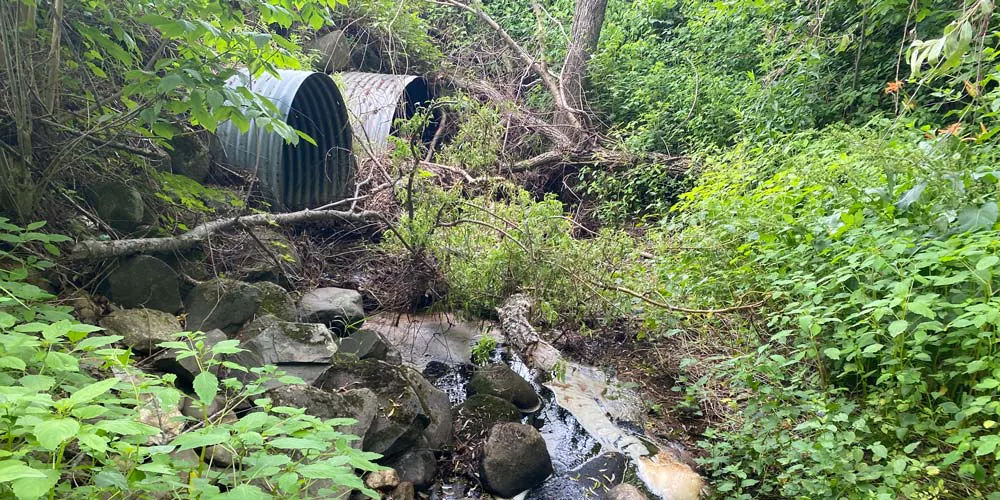
Across North America, conservation organizations are leading efforts to restore streams, reconnect wildlife habitat, and replace aging road-stream crossings that no longer meet environmental or infrastructure needs. The United States alone contains more than 6.6 million road-stream crossings. As aging culverts and small bridges are evaluated for replacement, conservation organizations have an opportunity to improve fish passage, wildlife connectivity, flood resilience, and long-term stream health. From local Trout Unlimited chapters and watershed councils to national organizations like The Nature Conservancy, these groups are helping communities invest in bridges and crossings that work with nature instead of against it.
While every project has unique engineering and environmental requirements, conservation organizations often look for the same qualities in a crossing solution:
- Minimal disturbance to streams and the surrounding habitat
- Reliable, repeatable designs that can be used across multiple projects
- Efficient installation that helps maximize limited funding
- Long-term durability that reduces future impacts and maintenance
Velpont's modular precast crossing system was developed with those priorities in mind. Its open-bottom bridge design preserves the natural streambed while its modular components provide a repeatable approach that can support restoration efforts across entire watersheds, not just individual crossing projects.
Conservation isn't just a single project, it's a long-term strategy
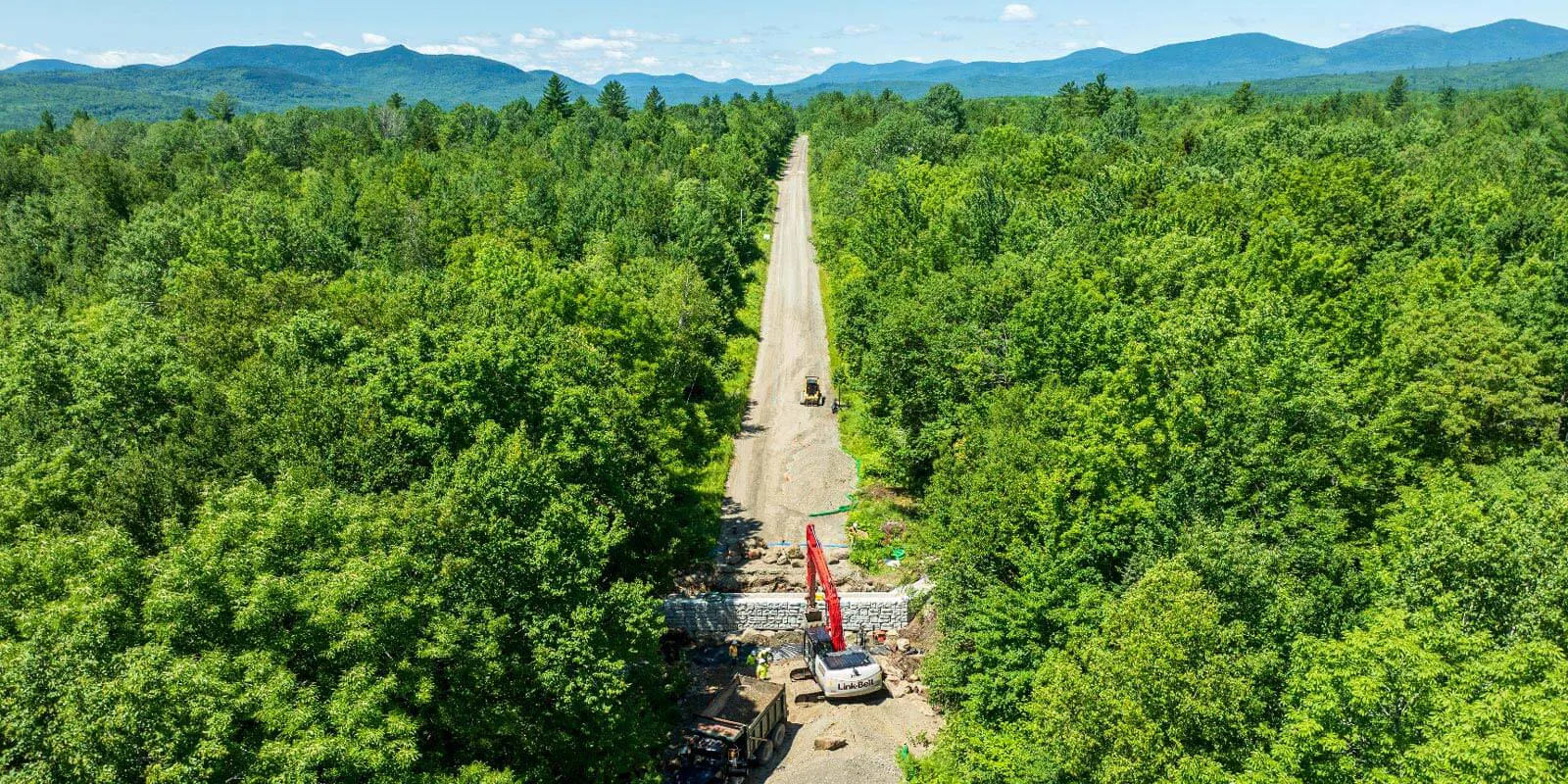
Most conservation organizations aren't replacing a single crossing. They're working through watershed restoration plans, fish passage initiatives, or habitat connectivity programs that identify dozens, even hundreds, of priority crossings over many years. That makes repeatability nearly as important as environmental performance.
Rather than developing an entirely new crossing solution for every location, Velpont is engineered to provide a consistent framework that can be adapted to individual site conditions while maintaining familiar construction methods and components.
For organizations pursuing multiple restoration projects, that can mean:
- Greater consistency from project to project
- More predictable construction planning
- Simplified coordination between engineers, contractors, and funding partners
- A practical solution that can be implemented across an entire watershed or region
Having a repeatable crossing system can help conservation organizations focus more of their time and resources on improving ecosystems rather than reinventing infrastructure.
Helping conservation funding go further
Funding is one of the greatest challenges facing conservation organizations, and securing resources to replace or install road-stream crossings isn't getting easier. Whether projects are supported by federal grants, watershed initiatives, state programs, nonprofit partnerships, or private foundations, every dollar must deliver lasting value.
Just as importantly, conservation funding rarely arrives all at once. One grant may fund two crossing replacements this year, while another supports additional projects over the next construction season. Restoration efforts often unfold over several years, making consistency and repeatability just as important as environmental performance.
Velpont's modular precast crossing system was designed with that reality in mind. Its standardized, interchangeable components provide a consistent foundation that can be adapted to site-specific engineering requirements while supporting multi-phase restoration programs. Organizations can move from one project to the next with confidence, knowing they're using the same proven system throughout a watershed or regional initiative.
Velpont also helps conservation organizations maximize limited funding through:
- Efficient installation using standard construction equipment
- Smaller construction crews than many conventional bridge projects
- Pre-engineered modular components that help reduce on-site labor
- Installation schedules often measured in days rather than weeks or months, depending on project conditions
- A projected 75+ year service life that supports long-term ownership value
When construction windows are limited by seasonal environmental restrictions, efficient installation can also help organizations complete more restoration work during each construction season, making the most of available funding while minimizing disruption to sensitive ecosystems.
Environmental sensitivity starts with the crossing itself
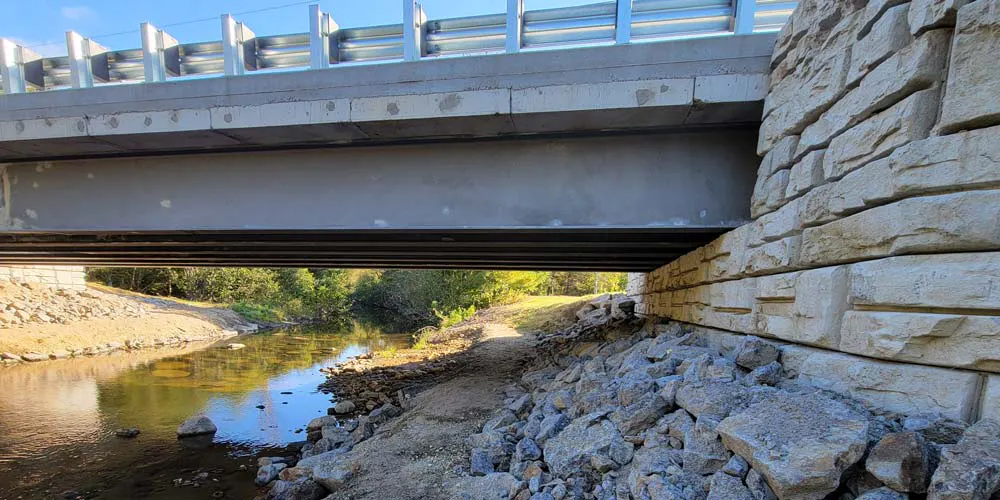
A project’s success isn't measured only by how quickly the crossing is installed. It's measured by how naturally the stream functions decades after construction. Velpont's open-bottom bridge system allows streams to remain streams. Two of North America’s most respected conservation organizations – the Appalachian Mountain Club and the Atlantic Salmon Federation – strongly endorse open-bottom road crossings and the massive impact they make on ecosystem resiliency efforts.
Rather than forcing water through a pipe culvert or an enclosed box, a Velpont crossing spans the channel, leaving the natural streambed in place. That helps preserve many of the characteristics conservation organizations work to protect, including:
- Natural sediment transport
- Bankfull channel width
- Aquatic organism passage
- Natural stream processes
- Healthy streambanks
- Habitat continuity Maintaining these natural features can support healthier waterways while reducing many of the long-term issues associated with undersized or aging traditional crossings.
Supporting wildlife connectivity
Healthy watersheds depend on more than healthy streams. Reconnecting fragmented landscapes by improving wildlife movement corridors also plays a significant role in ensuring the long-term vibrancy of habitats.
Stream valleys naturally provide travel routes for mammals, reptiles, amphibians, and other terrestrial species, making road-stream crossings an important part of larger habitat connectivity efforts.
Because Velpont preserves the natural channel and adjacent streambanks, it can help maintain these movement corridors where site conditions allow. The result is infrastructure that supports both aquatic organism passage and wildlife movement without requiring separate structures.
Velpont can also be used to create terrestrial-only wildlife underpasses. By providing dedicated passage for mammals, reptiles, and amphibians beneath roadways, these structures can help reduce habitat fragmentation. Where appropriate, they can also complement broader efforts to reduce wildlife-vehicle conflicts.
For organizations pursuing ecosystem-scale restoration, every crossing becomes an opportunity to strengthen connections both in and out of the water.
A crossing system built on common ground
Successful restoration projects rely on collaboration. Conservation organizations regularly coordinate with municipalities, transportation agencies, engineers, contractors, landowners, tribal governments, and funding partners to replace aging crossings.
Velpont fits naturally within these partnerships by providing a crossing system that balances environmental stewardship, construction efficiency, and long-term infrastructure performance.
Instead of treating infrastructure and conservation as competing priorities, Velpont demonstrates how resilient transportation networks and healthy ecosystems can actually support one another.
Building healthier watersheds, one crossing at a time
The right crossing system should do more than solve an immediate infrastructure problem. It should provide a repeatable, environmentally responsible, and durable solution that can support restoration programs well into the future. Conservation groups, engineers, governments, and landowners should be able to agree on a crossing solution that meets the needs of travelers above and below.
Velpont was designed to help make this collaboration not only possible but also practical.
Planning a road-stream crossing replacement or watershed restoration project?
Explore how you can use Velpont's modular open-bottom bridge system to support your conservation goals with efficient, repeatable, and environmentally responsible infrastructure.