Blake Hill Road Bridge
Owner: Town of Mount Vernon Location: Mount Vernon, Maine Manufacturer: Dirigo Bridge Co. Installer: Starrett Snow & Landscape Services Partners: Maine Department of Transportation Length: 70 ft (21.3 m) Steel Bridge with Precast Deck Panels (67 ft [20.4 m] Clear Span) Width: 28 ft (8.5 m) Year Built: 2026
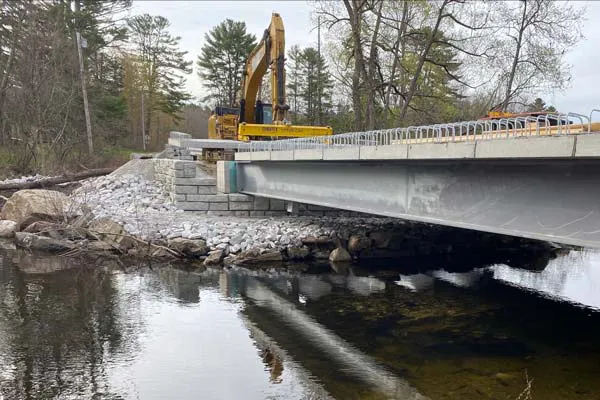
The Blake Hill Road Bridge, spanning Hopkins Stream, had become a growing concern for the Town of Mount Vernon. The community, located in central Maine's Lakes Region, had witnessed years of deterioration, leaving the structure posted with a 3-ton weight limit that restricted emergency vehicles, school buses, service trucks, and other legal loads. The Town needed a cost-effective solution to restore year-round access while ensuring long-term reliability.

Photo on the right courtesy of Town of Mount Vernon, Maine's Facebook page.
THE CHALLENGE: A Weight-Restricted Bridge Limiting Community Access
The existing bridge had deteriorated to the point that it could no longer support the vehicle access necessary to serve the community. In 2020, local media reported that emergency response times had doubled for homes across the bridge due to weight restrictions preventing fire trucks from using the failing crossing. School transportation and municipal service vehicles also faced significant limitations, creating serious safety and operational concerns for the town.
Winter conditions compounded the problem. Because the bridge could not support the weight of the Town’s snow removal equipment, it was closed entirely during the winter months, shutting off access for residents.
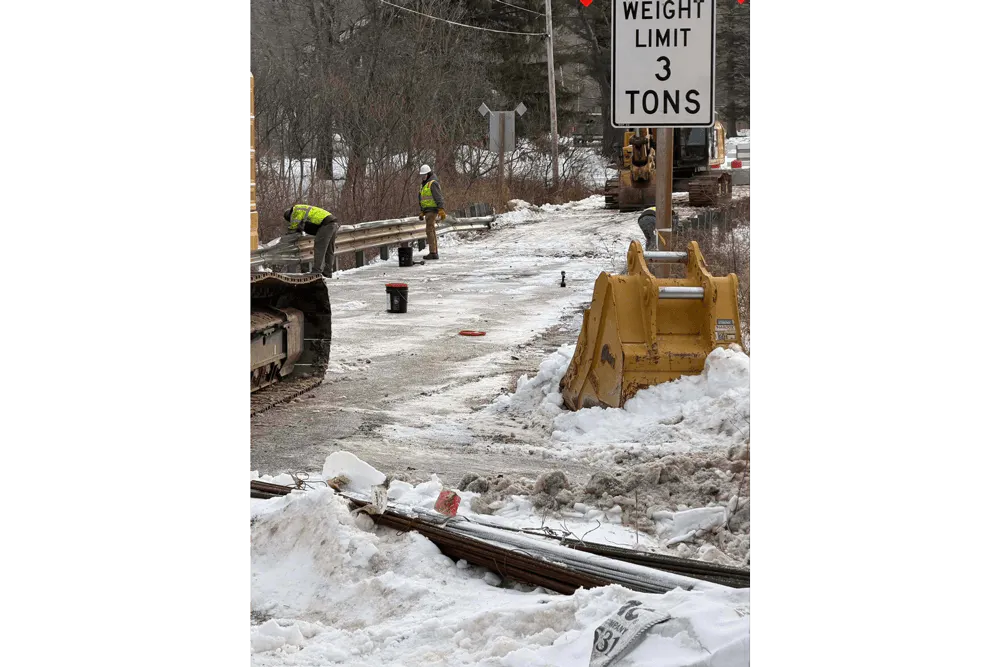
Project stakeholders required a replacement structure that could restore full functionality without incurring excessive construction costs or long-term maintenance burdens.
THE SOLUTION: A Bridge System That Cut Cost and Trimmed Time
The bridge replacement project team evaluated both the traditional cast-in-place abutment design and a Velpont modular precast abutment system. While technically feasible, cast-in-place concrete abutments required additional field labor, formwork, and construction time, resulting in significantly higher project costs. Ultimately, Velpont was selected because its modular approach reduced contractor costs by more than $200,000 compared to the cast-in-place alternative. Much of that savings came from the efficiency of prefabricated components, which minimized field construction activities and accelerated the bridge repair process.
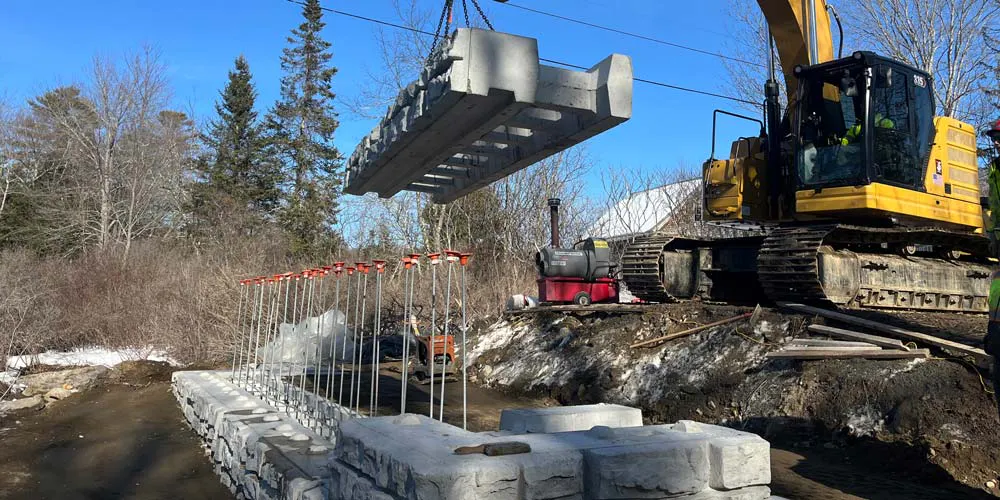
The Velpont abutment system, produced by local Maine manufacturer Dirigo Bridge Co., also addressed the project's structural requirements through a reinforced connection to bedrock. A cast-in-place concrete foundation mat was pinned directly to bedrock, creating a stable base for the bridge. Vertical reinforcing bars extended from the foundation into the Velpont abutment cores, integrating the modular units with the foundation system.
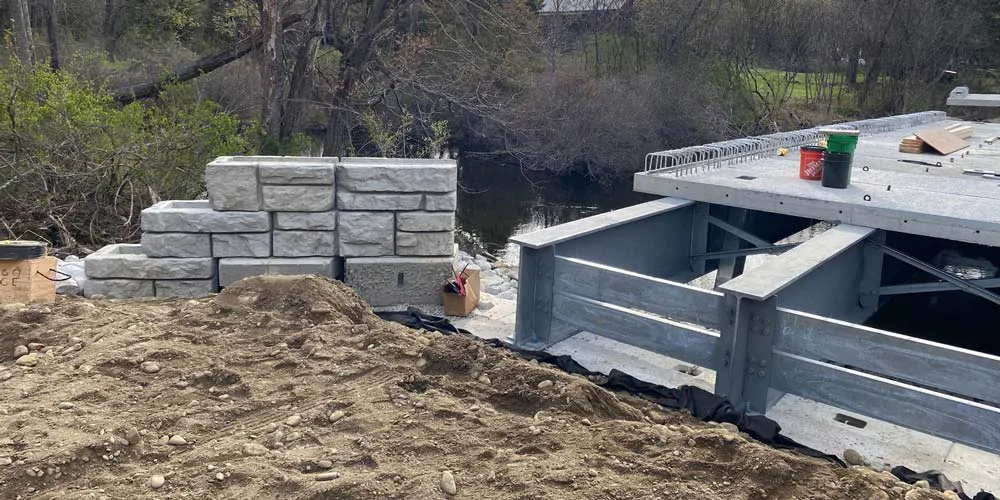
Once the steel girders and precast deck panels were installed, the abutment cores were reinforced and filled with concrete, creating a monolithic structural system that delivers long-term performance while reducing field-forming requirements and construction complexity.
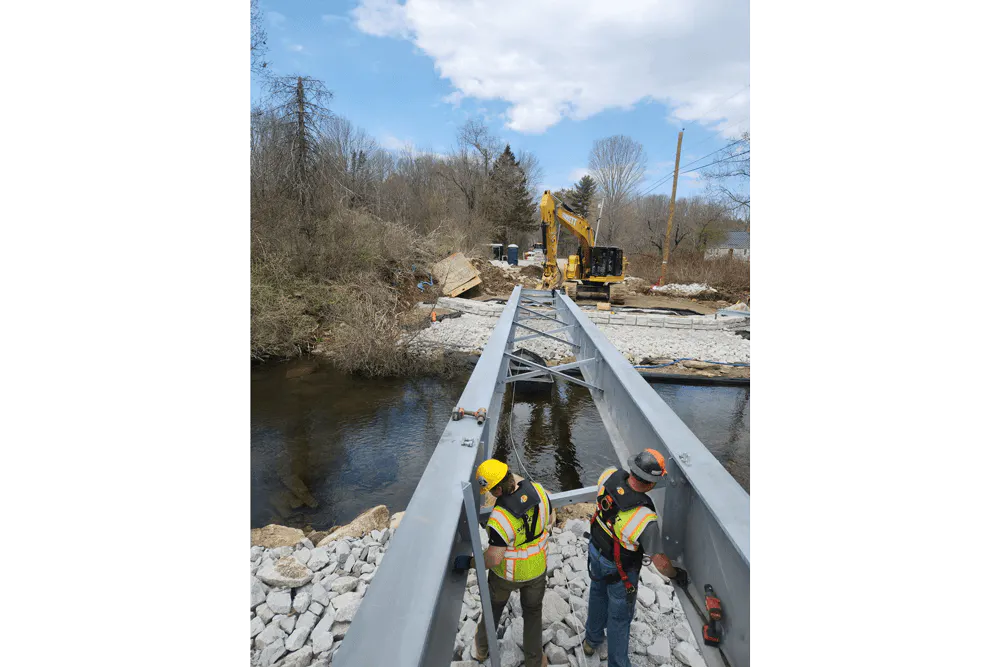
THE PROJECT: Efficient Construction with Modular Components
The Town closed the bridge for the winter on November 15, 2025, allowing demolition activities to be completed before the seasonal shutdown. This schedule created a unique advantage for both the Town and the contractor. With the crossing already out of service during the winter season, the contractor used portions of the project as winter infill work without creating additional traffic disruptions or impacting roadway operations.
After winter conditions subsided, excavation and construction resumed. Upon completion of the foundation mat, the modular Velpont abutments were set in place and immediately provided support for bridge erection. Unlike a traditional cast-in-place sequence that would require additional forming, curing, and staged concrete work before bridge construction could proceed, the modular abutments allowed steel girders and precast deck panels to be installed before the cores were reinforced and filled with concrete. This streamlined sequence reduced construction complexity, accelerated progress, and minimized environmental and site impact.
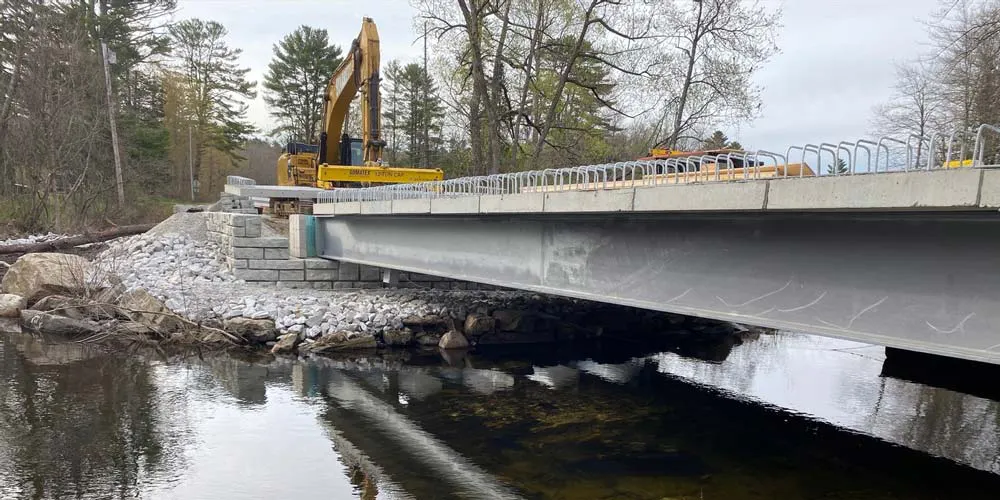
Unlike a traditional cast-in-place sequence that would require additional forming, curing, and staged concrete work before bridge construction could proceed, the modular abutments allowed steel girders and precast deck panels to be installed before the cores were reinforced and filled with concrete. This streamlined sequence reduced construction complexity, accelerated progress, and minimized environmental and site impact.
THE OUTCOME: A Modern Bridge Designed for Decades of Service
The completed Blake Hill Road Bridge opened to traffic ahead of schedule on June 12, 2026, replacing a severely weight-restricted and structurally deficient crossing with a modern 70-foot (21.3 meter) bridge.
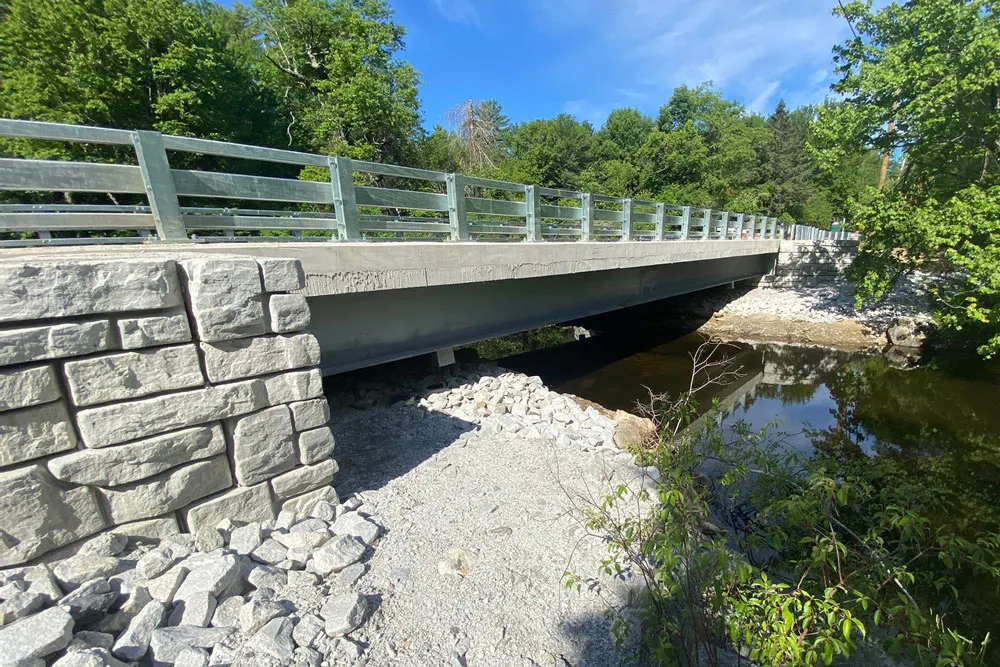
The new crossing restores dependable year-round access for residents, emergency responders, school transportation, and municipal services. It also eliminates the seasonal operational challenges that previously forced the crossing to close during winter.
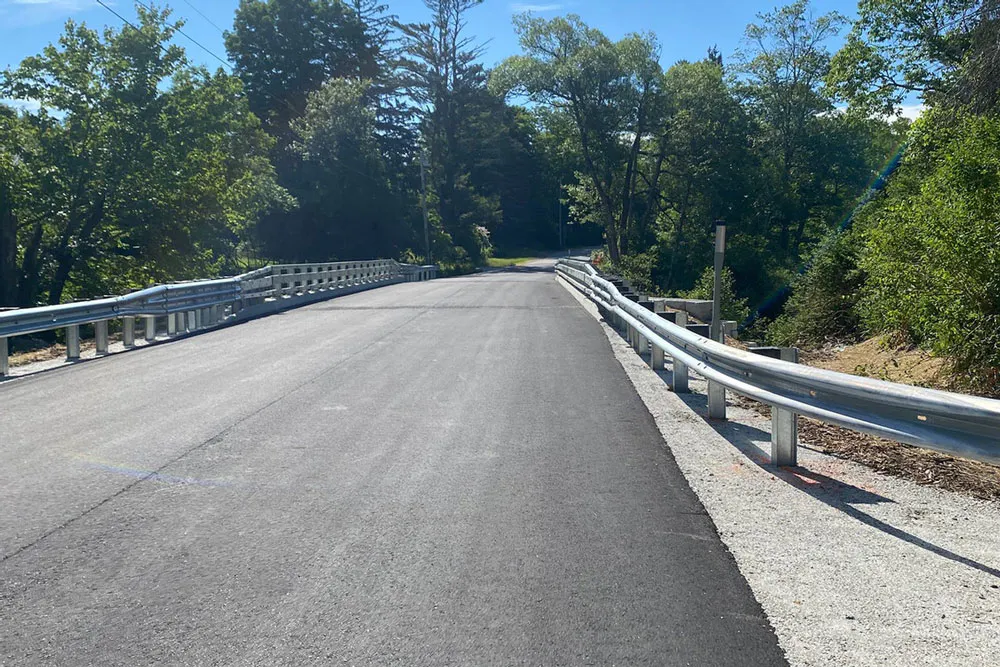
By combining a reinforced foundation system with modular precast construction, the Town of Mount Vernon achieved a resilient bridge designed for a long service life while realizing significant construction cost and installation time savings. The result is a safer, stronger, and more reliable crossing that will serve the community for decades to come.