Comparing Crossings: Velpont vs Concrete Box Culverts
Avg. Read Time: 4 min, 56 sec
Bridging the Gap
Short on time? Here are this article’s key takeaways…
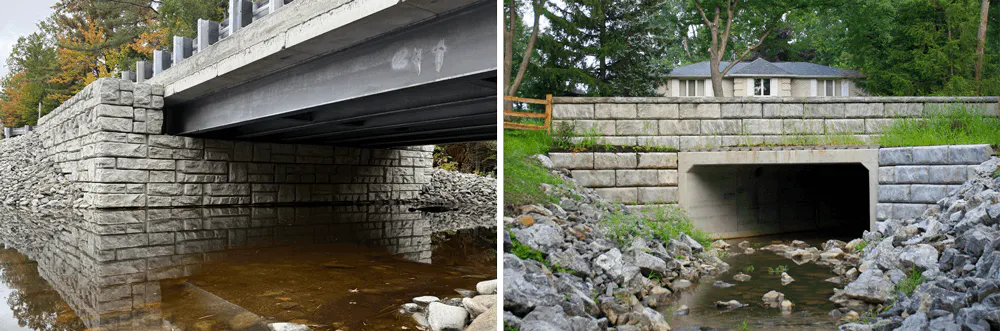
Box culverts and Velpont offer two different approaches. Concrete box culverts enclose water within a structure beneath the roadway, while Velpont bridges carry the roadway above the stream, allowing more natural channel conditions.
Construction and performance vary by design. Box culverts rely on excavation, structural placement, and precise sizing, while modular bridge systems emphasize streamlined installation and reduced site disruption.
Project outcomes depend on more than upfront cost. Factors like hydraulic behavior, durability, maintenance, and construction complexity all influence long-term performance.
The right solution is context-specific. Engineers and owners must weigh site conditions, environmental goals, and lifecycle expectations when selecting between culverts and open-span bridge systems.
Concrete box culverts are a widely used structure in transportation infrastructure, designed to carry water beneath roadways, rail lines, and embankments. Typically constructed of reinforced concrete in a rectangular shape, box culverts provide a rigid passage for streams, drainage channels, and stormwater flows to move under the roadway while supporting the loads above.
Box culverts may be cast in place on site or installed as precast concrete sections, depending on project requirements. Their structural strength and straightforward geometry have made them a common solution for road–stream crossings, particularly where engineers need to support heavy loads while managing moderate to high water flows.
Because they are installed within the roadway embankment, box culvert construction typically involves excavating the channel, installing the culvert structure, and rebuilding the roadway above it. When properly designed and installed, these structures can provide reliable service for decades.
Another approach to road–stream crossings is the Velpont modular bridge system, an open-span structure that carries the roadway over the stream channel rather than enclosing it within a culvert. Because these two solutions manage water flow and construction differently, they present distinct considerations for installation, hydraulic performance, durability, environmental impact, and cost.
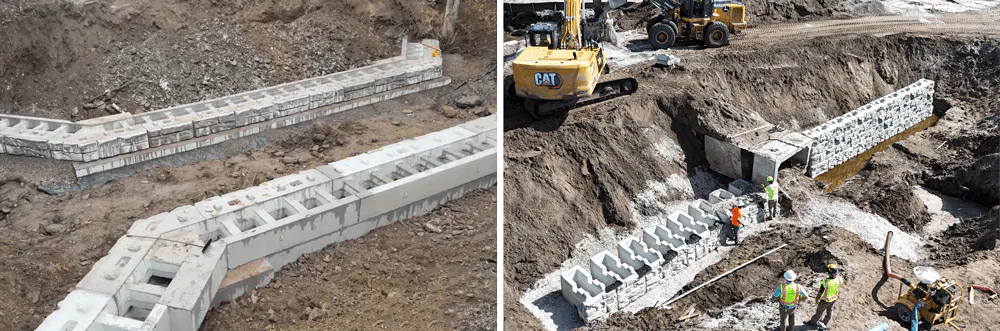
Installation
The construction process for a road–stream crossing often determines the complexity of a project. Factors such as site access, excavation needs, construction sequencing, and equipment requirements can influence both cost and scheduling.
Both approaches rely on conventional construction equipment. However, box culvert installations typically involve more excavation and structural work within the channel and the roadway base, while modular bridge systems may reduce the duration of in-channel construction.
Velpont
- Modular components are fabricated off-site and delivered ready to install
- Structural elements are typically assembled from the streambanks
- Many installations require limited channel disturbance
- Construction often progresses quickly once site preparation is complete
- Projects commonly rely on standard construction equipment and small crews
Concrete Box Culverts
- Culvert structures are placed within the roadway embankment Construction requires excavating the channel and roadway base Culverts may be precast units or cast-in-place concrete structures Backfill and compaction are required to rebuild the roadway above the culvert Construction timelines may be influenced by curing periods, excavation depth, and water management
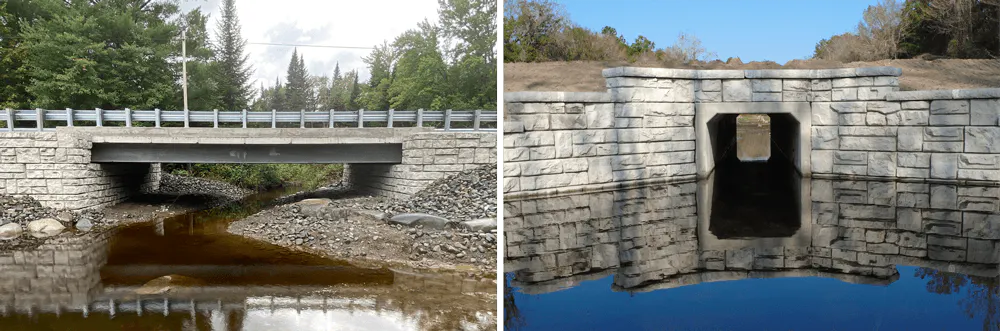
Hydraulic Performance
A crossing’s hydraulic capacity determines how effectively it can handle storm flows, sediment movement, and debris transport. Structures that cannot pass sufficient water during major rainfall events may contribute to overtopping, erosion, or road damage.
Because box culverts enclose the stream within a defined structure, their hydraulic effectiveness depends on accurate sizing and careful design. Open-span crossings, such as Velpont, instead carry the roadway above the channel, allowing the stream to maintain a more natural flow path.
Velpont
- Open-span bridge structure carries the roadway over the stream
- Allows water to flow along the natural streambed
- Supports natural sediment transport through the channel
- Larger opening can help reduce debris accumulation at the crossing
Concrete Box Culverts
- Water passes through a rectangular reinforced concrete chamber
- Flow capacity depends on culvert dimensions and slope
- Debris and sediment may collect within the culvert opening
- Improperly sized culverts may increase water velocity and downstream erosion
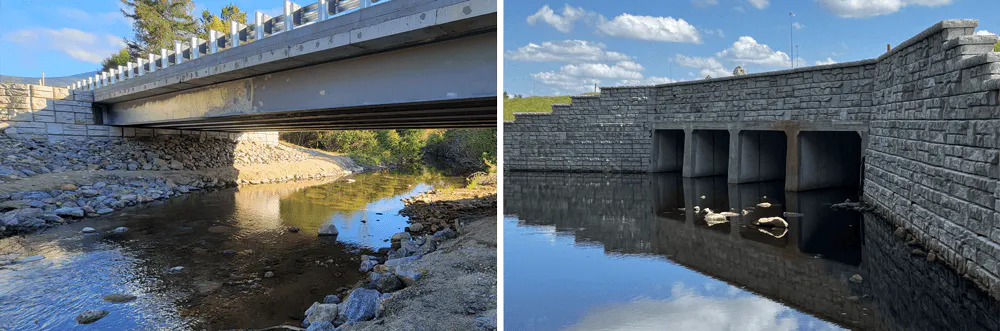
Durability and Maintenance
Crossing structures are expected to withstand continuous water exposure, freeze–thaw cycles, traffic loads, and environmental conditions over many years.
Both Velpont bridges and concrete box culverts rely on reinforced concrete for durability. The primary structural difference lies in how each system carries roadway loads and interacts with the surrounding soil and stream channel.
Velpont
- Built from reinforced wet cast concrete
- Concrete mix designs support severe weather exposure conditions
- Structural components are engineered for long-term performance
- Bridge systems are typically designed with a projected service life exceeding 75 years
Concrete Box Culverts
- Constructed using reinforced concrete
- Known for high structural capacity and rigidity
- Performance depends on installation quality and soil conditions
- Over time, issues such as joint deterioration or settlement may require maintenance
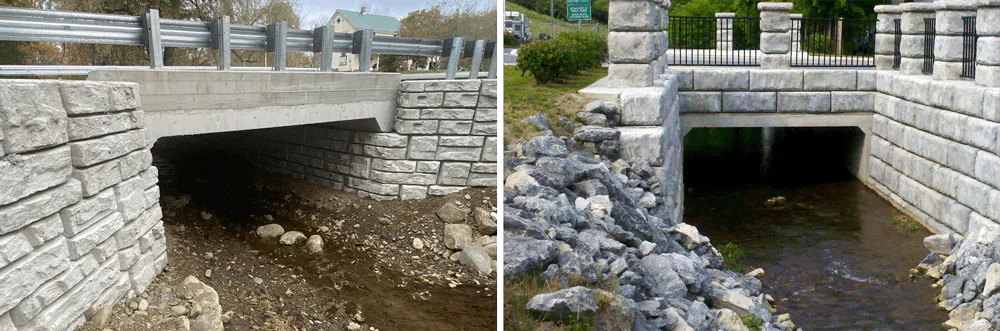
Environmental Considerations
Road–stream crossings influence more than transportation networks. They can also affect stream stability, aquatic habitat, and wildlife movement.
Environmental impacts vary depending on project design and site conditions. In many restoration-focused projects, engineers favor open-span crossings because they allow streams and habitats to remain closer to their natural condition.
Velpont
- Leaves the natural streambed undisturbed beneath the crossing
- Supports fish passage and wildlife movement along the channel
- Construction can minimize disturbance within the active waterway
- Allows the stream to maintain its natural width and flow pattern
Concrete Box Culverts
- Replaces the natural channel with a concrete base
- Installation often requires dewatering, excavation, and reshaping of the streambed
- Openings may alter water velocity through the crossing
- Wildlife movement through culverts depends on size, design, and water depth
Cost
Project budgets often begin with material costs, but experienced project teams also consider construction complexity, schedule, and long-term maintenance requirements.
Box culverts may present attractive initial pricing in certain projects; however, the full project cost depends on site conditions, construction logistics, and expected service life. For this reason, many infrastructure owners evaluate crossings based on lifecycle value rather than material cost alone.
Velpont
- Material costs may be higher than some precast box culvert solutions, but lower if cast-in-place is selected
- Faster installation may reduce construction labor and equipment duration
- Reduced channel disturbance can help minimize pre-project permitting burdens and control planning costs
- Long design life can help limit future replacement cycles
Concrete Box Culverts
- May offer lower initial material costs in some applications
- Construction often involves substantial excavation and structural placement
- Installation may require costly water control or diversion measures
- Long-term costs may include inspection, maintenance, or replacement
Additional Considerations
Concrete box culverts remain a widely used crossing solution due to their structural strength and familiarity within the construction industry. They can be appropriate for many drainage and roadway applications where site conditions support culvert installation.
At the same time, transportation agencies and environmental organizations increasingly consider whether a crossing can improve hydraulic performance, reduce flood risk, or restore stream connectivity. In some cases, open-span bridge systems such as Velpont may be favored as alternatives that allow streams to remain more naturally configured beneath the roadway.
The Bottom Line
Both Velpont bridges and concrete box culverts are capable of supporting roadway infrastructure where streams intersect transportation corridors. Concrete box culverts provide a reinforced structural passage beneath the roadway, carrying water through a rigid concrete chamber. Velpont bridges take a different structural approach by spanning the channel and supporting the roadway above the stream, leaving the streambed largely undisturbed.
For engineers, contractors, and project owners evaluating crossing options, the most appropriate solution will depend on site geometry, hydraulic requirements, construction constraints, environmental priorities, and long-term infrastructure objectives.