Comparing Crossings: Velpont vs Corrugated Pipe Culverts
Avg. Read Time: 4 min, 49 sec
Bridging the Gap
Short on time? Here are this article’s key takeaways…
Two common approaches to road–stream crossings – corrugated pipe culverts and open-span bridges like Velpont – handle water, installation, and environmental impacts in fundamentally different ways.
Pipe culverts move water through a confined opening, while open-bottom bridges span the stream, allowing the channel, sediment, and wildlife to pass beneath the roadway more naturally.
Construction methods and durability vary significantly, with culverts typically requiring in-stream excavation and more frequent replacement, while modular bridge systems emphasize faster installation and a longer service life.
Choosing the right crossing depends on project priorities, including hydraulic capacity, installation constraints, environmental considerations, and long-term infrastructure performance.
Road–stream crossings are essential components of transportation infrastructure, connecting communities, farms, timber operations, and recreation areas. For decades, corrugated pipe culverts have been one of the most common solutions for carrying water beneath roadways because they are widely available and familiar to contractors. However, many older culverts were installed without fully accounting for long-term hydrology, flood capacity, or ecological connectivity. As these crossings age, they can contribute to erosion, flooding, and habitat fragmentation.
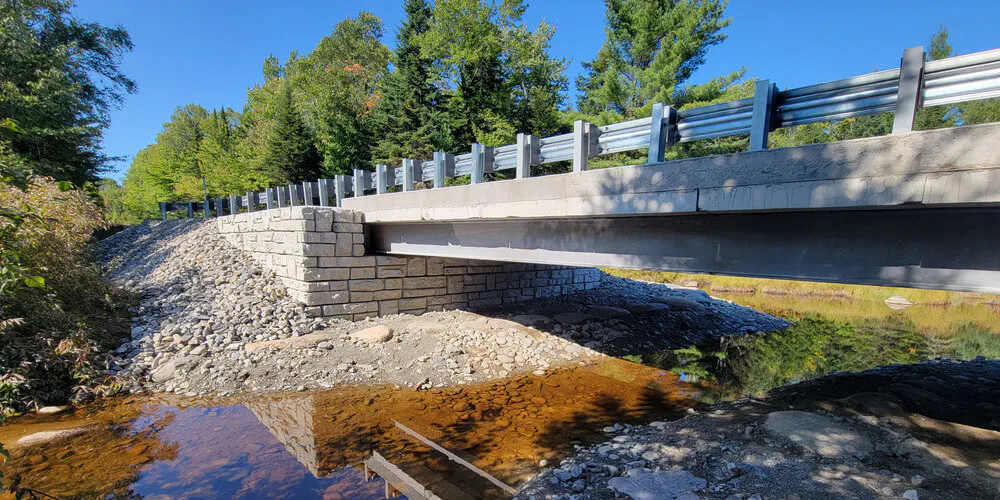
An alternative approach is the Velpont modular bridge system, an open-bottom crossing designed to span streams rather than confine them. In this article, we compare Velpont bridges and corrugated pipe culverts across key considerations, including installation demands, hydraulic performance, durability, environmental impact, and cost.
Installation
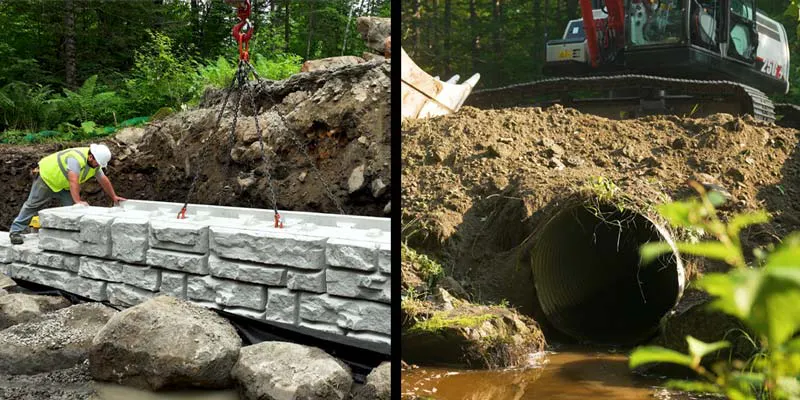
Installing a road–stream crossing is often the most time-sensitive portion of the project. Equipment needs, access limitations, and construction timelines all influence cost and risk.
Velpont
- Modular precast concrete components are delivered ready for installation
- Abutments are typically installed from the streambanks
- Many projects require minimal or no streambed excavation
- Construction can often be completed in days
- Installation typically uses a small crew and standard equipment
Corrugated Pipe Culverts
- Pipes are installed within the stream channel beneath the roadway
- Installation requires streambed excavation and roadway excavation
- Pipe sections must be placed on prepared bedding material
- Culverts require backfill and channel reconstruction after installation
- Construction timelines vary and may extend due to water control and site conditions
Both solutions can be installed with standard construction equipment, but culvert installations often require more excavation, greater in-stream work, and longer installation timelines.
Hydraulic Performance
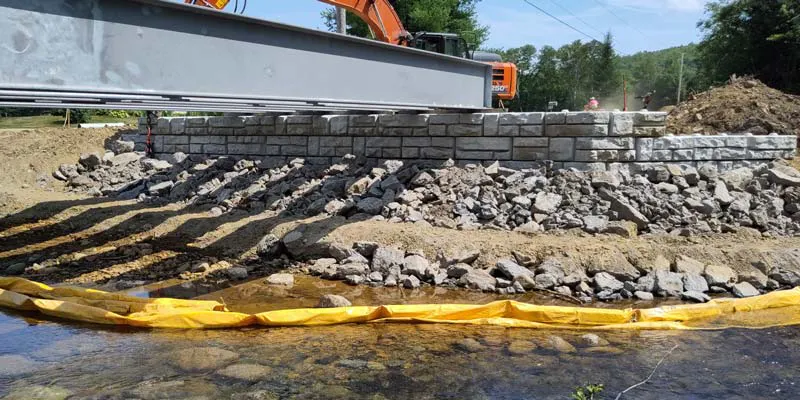
A crossing’s ability to move water effectively affects flood resilience, erosion risk, and long-term roadway stability. Road-stream crossings that are unable to handle flows generated by storm events can cause overtopping (when water rises high enough to flow over the roadway), washouts, and catastrophic road failures. Read about why project leaders chose Velpont to replace failing culverts within an environmentally-sensitive stream corridor.
Velpont
- Open-bottom bridge design minimizes in-stream work
- Spans the stream channel instead of narrowing it
- Maintains natural water flow and sediment transport
- Reduces the likelihood of debris blockage
Corrugated Pipe Culverts
- Water flows through a fixed-diameter pipe beneath the roadway
- Hydraulic capacity is limited by pipe size and slope
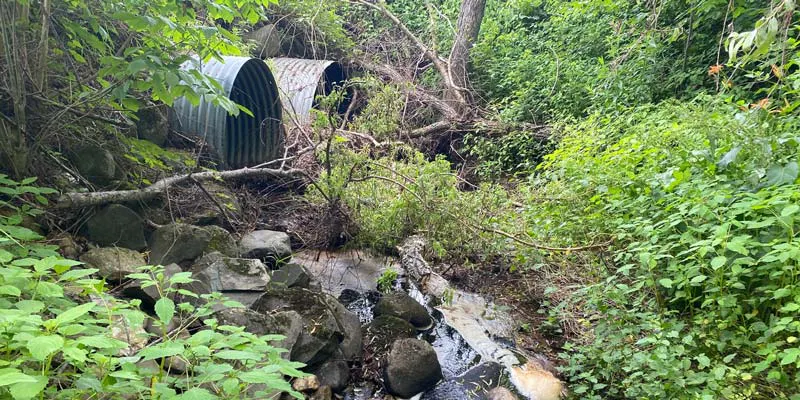
- Debris and sediment may accumulate at the pipe inlet or outlet
- Undersized culverts can accelerate water velocity and increase downstream erosion
Because culverts restrict water to a pipe opening, they must be carefully sized to accommodate peak flows. Bridge-style crossings like Velpont span the channel rather than narrowing it, helping water to move more naturally and allowing the stream to behave like a stream.
Durability and Maintenance
Project owners must consider how materials perform under water exposure, freeze–thaw cycles, and de-icing chemicals over decades.
Velpont
- Constructed from architectural-grade wet cast concrete
- Engineered for severe freeze–thaw exposure conditions
- Offers strong corrosion resistance compared to metal alternatives
- Designed as long-term infrastructure with a 75+ year projected service life
Corrugated Pipe Culverts
- Typically manufactured from corrugated steel or aluminum
- May experience corrosion risk in aggressive environments
- Sediment buildup can reduce hydraulic capacity
- Infrastructure owners may face periodic replacement cycles
The lifespan of corrugated pipe culverts can vary depending on many environmental factors, but a generally accepted service period is 20-40 years, or roughly half the projected service time of Velpont.
Environmental Considerations
Road–stream crossings influence stream stability, water quality, and wildlife movement.
Velpont
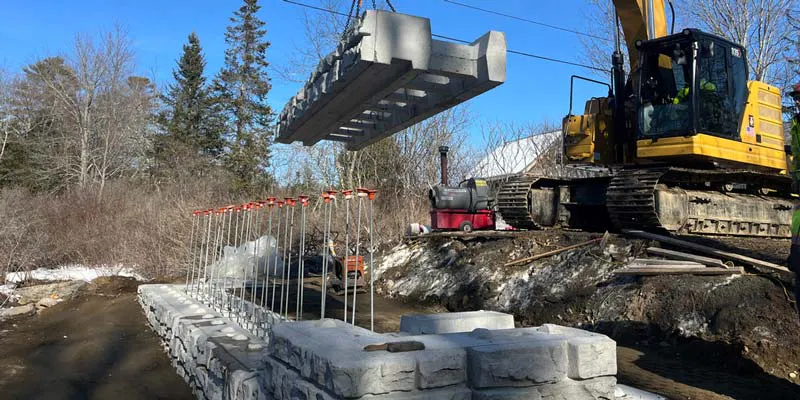
- Open-bottom design preserves the natural streambed
- Supports aquatic organism passage and wildlife movement beneath the roadway
- Installation often results in minimal in-stream disturbance
- Maintains natural bankfull width and stream processes
Corrugated Pipe Culverts
- Installation typically requires channel excavation
- Pipes can create velocity barriers for fish and aquatic species
- Improper installations may result in perched culverts
- Flow restriction can cause erosion and sediment disruption
For projects involving fisheries, habitat restoration, or conservation partnerships, open-span crossings are often considered because they maintain natural stream function.
Cost
When evaluating road–stream crossing solutions, cost is often the first factor discussed. However, experienced project stakeholders recognize that the total installed cost and long-term lifecycle value can differ significantly from the initial material price.
Velpont
- Material costs may be higher as they reflect the use of reinforced wet cast concrete structural components
- Installation efficiency can reduce labor hours and equipment time
- Projects often benefit from shorter construction schedules
- Installation is frequently performed from the streambanks, which may reduce the resources needed for permitting and minimize dewatering requirements
- Long service life helps limit future replacement and maintenance costs
Corrugated Pipe Culverts
- Pipes often have a lower initial material cost
- Installation typically requires excavation of the streambed and roadway base
- Construction may involve additional bedding preparation and backfill work
- Water control measures, such as temporary diversion or dewatering, may increase installation costs
- Culverts may require periodic replacement or rehabilitation, depending on corrosion and site conditions
While corrugated pipe culverts are often selected for their lower upfront material cost, the overall project cost can be influenced by installation complexity, site conditions, and expected service life. In some situations, the faster installation and durability of bridge-style crossings help offset higher material costs over time.
For this reason, many project teams evaluate crossings based on total installed cost and long-term lifecycle value, rather than material price alone.
Additional Considerations
Corrugated pipe culverts remain common partly because they often have a lower initial material cost and can be appropriate for small drainage crossings with limited environmental sensitivity.
However, many agencies and conservation organizations are reevaluating culvert installations where flood risk, fish passage, or long-term infrastructure durability are concerns. In these cases, open-span structures such as Velpont bridges can provide improved hydraulic capacity and ecological compatibility while maintaining efficient installation methods.
The Bottom Line
Both Velpont bridges and corrugated pipe culverts serve as viable road–stream crossing solutions, but they approach the challenge differently.
Corrugated pipe culverts move water through a pipe beneath the roadway, which can restrict natural stream processes if the pipe is undersized or improperly installed.
Velpont bridges span the channel with an open-bottom configuration, allowing water, sediment, and wildlife to move freely beneath the crossing while supporting durable transportation infrastructure.
For engineers, contractors, and project owners evaluating crossing alternatives, the right solution ultimately depends on site conditions, hydraulic requirements, installation constraints, and long-term infrastructure goals.